

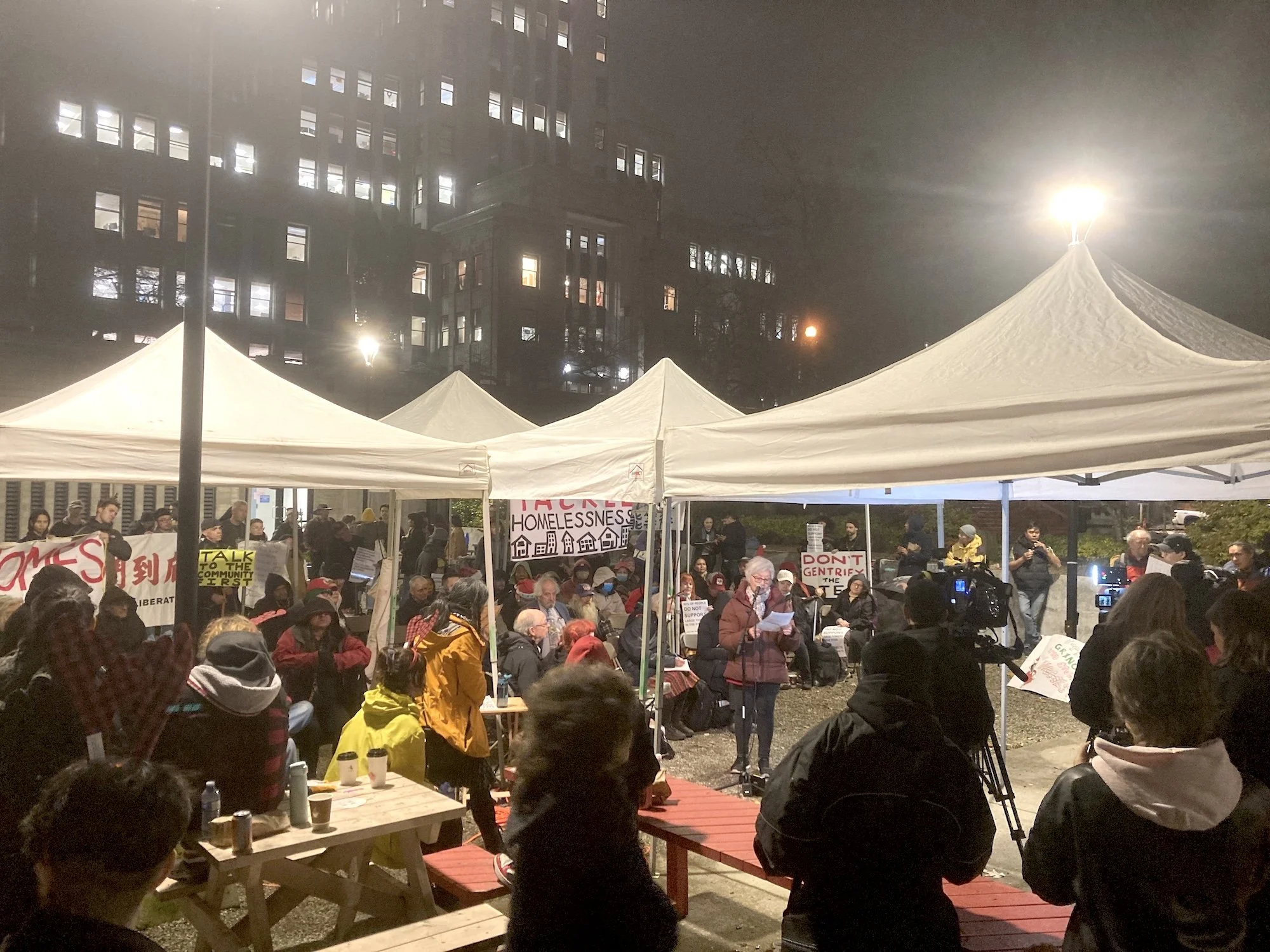
From 2023-2025, the Carnegie Housing Project worked closely with the DTES community to organize against a City rezoning plan that would gentrify the neighbourhood.
We rallied over 325 people to sign up to speak against the City’s plan, forcing the public hearing to extend over three days.
159 individuals took the time to share their stories, express their concerns, and ask council to reconsider. Not a single person spoke in favour of the plan.
Yet despite this overwhelming opposition, on December 16, 2025, an ABC majority council voted to rezone the DTES Oppenheimer District to allow for “financially viable” private market development.
Although this campaign has ended, the Carnegie Housing Project continues to push back against gentrification in the DTES and organize for actual solutions to the homelessness crisis.
Watch the beautiful and powerful comments from the community and allies
Public Hearing Day 1 (Note: Councillor questions start at 37 minutes and speakers start at 1hr 47min)
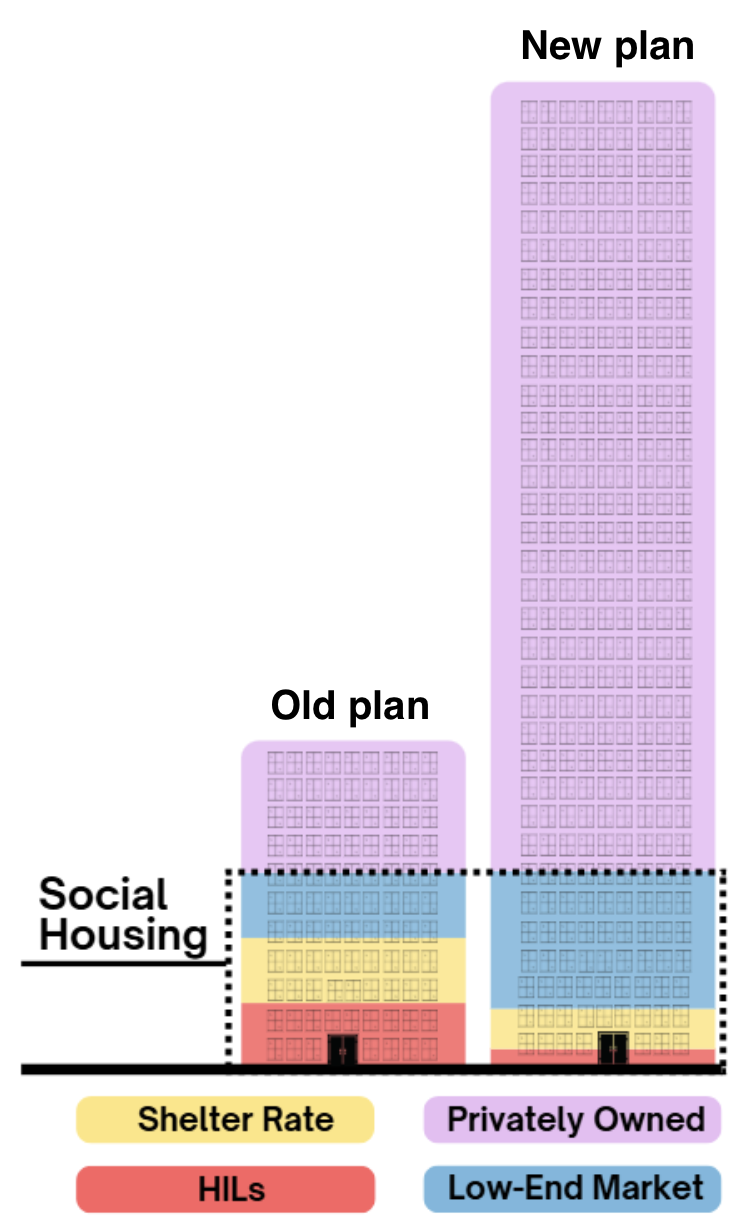
The City’s rezoning means that developers can now build towers up to 32 storeys and only need to include 4% shelter rate housing in new builds.
The old plan required 20% shelter rate housing.
The graphic shows the change between what the 2014 DEOD Local Area Plan (old plan) required and what the rezoning allows (new plan).
60% social housing —> 20% social housing in new rental buildings
33% of social housing units to be rented at shelter rate —> 20% of social housing units to be shelter rate
10 storeys maximum —> 32 storeys
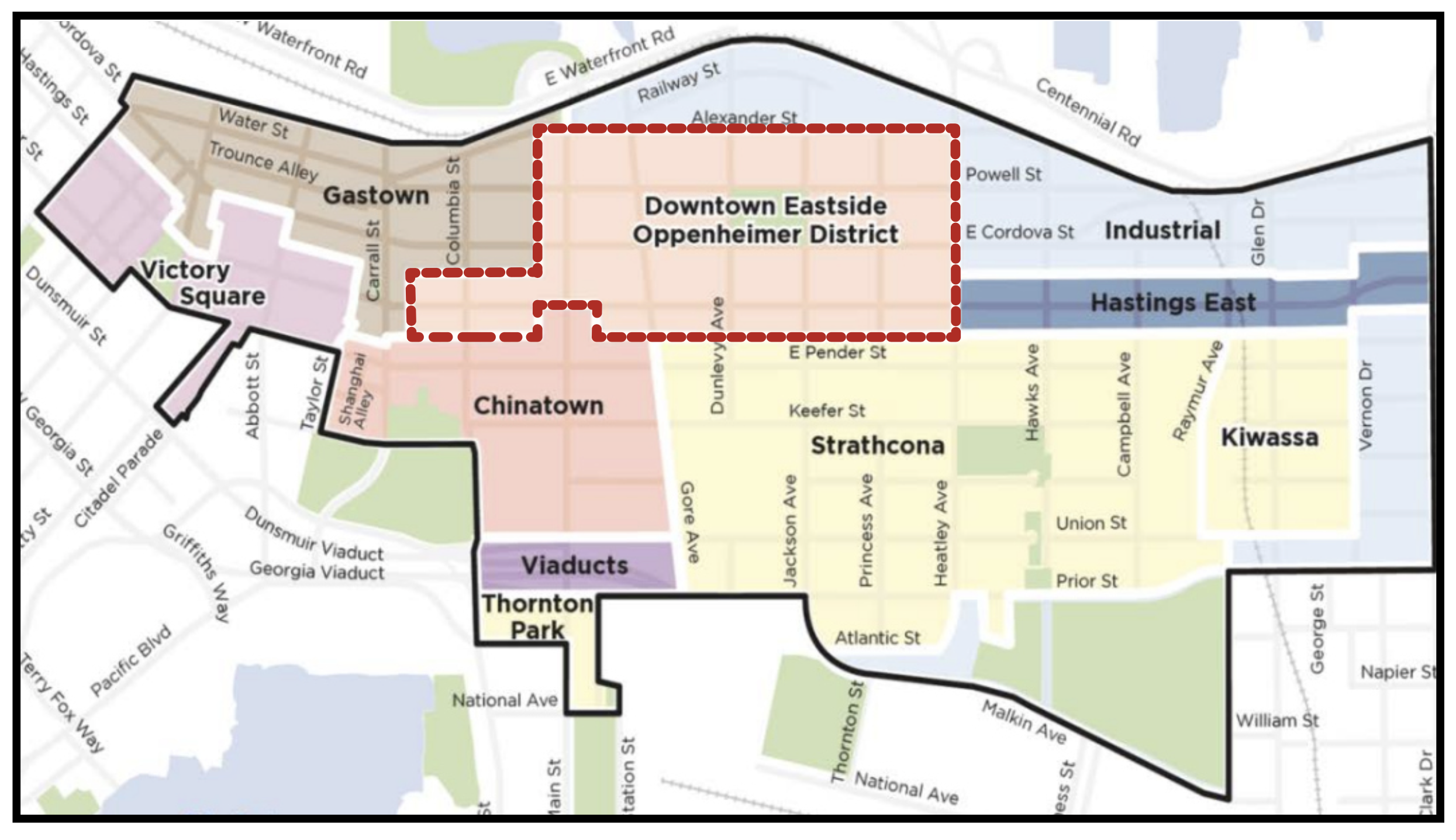
The rezoning applies to the Oppenheimer Distract and Thornton Park subareas of the DTES
The final rezoning had other problematic elements, including:
Loopholes in the Tenant Protection Policies for SRO landlords that could result in sneaky tenant evictions and increased homelessness
Making land acquisitions more expensive in the DEOD, making it harder for non-profits and the government to build desperately needed shelter rate housing
Not addressing how high-income, market-rental tenants will be able to integrate into a community that is already suffering from a lack of affordable housing
Giving private developers massive subsidy and ownership rights as an incentive to build social housing
And completely ignoring the need to house the 2,000 people with no-fixed-address in the DTES!
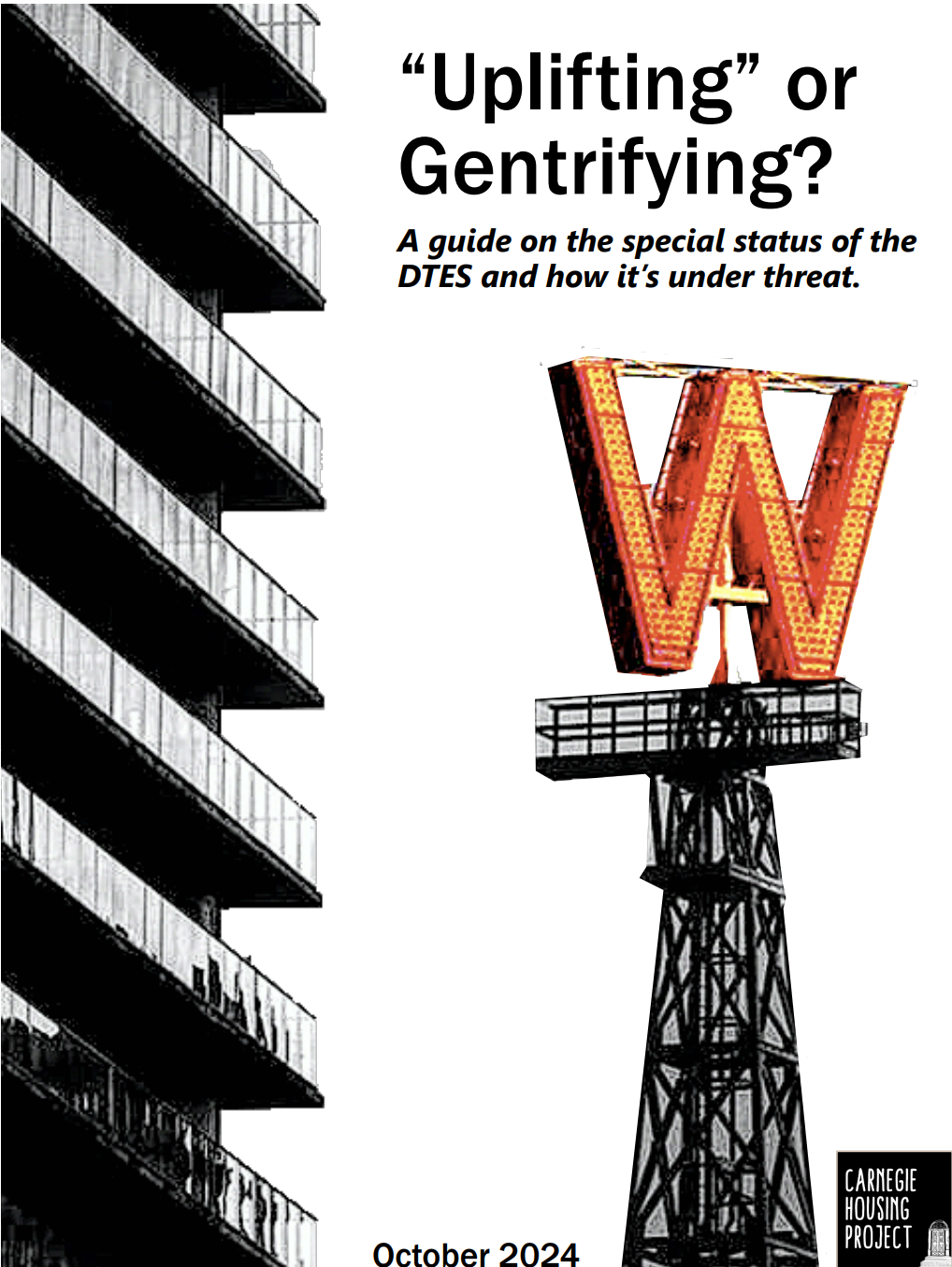
Download our guide to the special status of the DTES to understand why the neighbourhood’s zoning was working to create housing for poor people.
Check out what was said before and after the rezoning plan was passed
CBC Radio’s On The Coast interviewed Carnegie Housing Project about alternatives to the plan
Vancouver East MP Jenny Kwan wrote a letter to City council to oppose the rezoning and gentrification plan and shared it on Facebook
Other media outlets covered our December 9 press conference and rally
The Tyee published an article by CHP volunteer Gilles Cyrene that describes the connections between housing and income inequality
References
The original motion: Uplifting the Downtown Eastside and Building Inclusive Communities That Work for All Residents
The City’s summary of their public engagement about the plan (TL;DR Nobody liked it, but council passed it anyway)
The referral report that council voted on
Our backgrounder to the rezoning
The minutes and documents for the public hearing